

Let me start by introducing myself— I’m part of a furniture nail supplier that’s worked with thousands of upholsterers, furniture makers, and DIY enthusiasts over the past eight years. One question we get asked more than any other is: “Can furniture nails be used for leather furniture?” It’s a great question, because leather is a material that demands care— too fastener pressure and you’ll puncture or tear it; too weak a grip and trim will pull loose. Today, I’ll break down the science of leather upholstery, how furniture nails compare to other fasteners, when they work, when they don’t, and the mistakes to avoid. I’ll also share insights we’ve gained from watching customers test dozens of products (including our own lines) on leather pieces ranging from vintage mid-century sofas to modern accent chairs.
First, let’s get clear on what makes leather different from other upholstery materials. Fabric, cotton canvas, and even vinyl have a flexible, slightly porous structure that can hold small fasteners without much give. Leather, though, is a hide— it’s made of collagen fibers compressed and tanned to create a dense, sometimes rigid surface. Top-grain leather, the most common for high-end furniture, has a tight grain pattern and minimal stretch; split leather is thinner and more prone to tearing, while full-grain is the thickest and most durable. The thickness of the leather also matters: furniture leather ranges from 1mm (thin, used for back panels) to 4mm (thick, for seat cushions and armrests). When you drive a fastener through it, the angle, shank type, and head size all determine whether the leather stays intact.
Now, to answer the core question: Yes, furniture nails can work for leather furniture— but only the right kind. A lot of people assume all nails are created equal, so they grab a standard wood nail and try it, which almost always goes wrong. Let’s contrast furniture nails with other fasteners people might accidentally reach for. For example, a standard wood nail, like the ones linked here: Wood Nail, has a sharp, pointed tip and a smooth shank. When you drive this through leather, the smooth shank has nothing to grip— so even if you tap it in, it’ll pull loose over time as people sit or lean on the furniture. Worse, the sharp tip can puncture the back side of the leather, creating a tiny tear that quickly expands. We’ve had at least a dozen customers return furniture nails and say, “I tried wood nails and they didn’t hold— that’s why I came back to you.”
What about other nails people might test, like a sod staple Sod Staple or EG Roofing Nail EG Roofing Nail? Those are way too heavy-duty for upholstery. Sod staples are meant to hold sod down to soil, so they have a broad crown and thick legs that will punch right through thin leather, leaving a gaping hole. Roofing nails are even worse— they’re long, thick, and designed to penetrate shingles, so driving one through leather will almost always split the hide or create a tear that ruins the piece. We’ve seen customers who tried roofing nails end up having to re-upholster entire panels because of the damage. EG Concrete Nails AT Shank EG Concrete Nails AT Shank? Skip those entirely— they’re for masonry, and their super-hard shank will not only tear leather but also bend when you try to drive them in, making them useless for upholstery. Even galvanized iron nail Galvanized Iron Nail (which we sell in our line for specific uses) isn’t ideal for leather unless you’re using our furniture-specific variant.
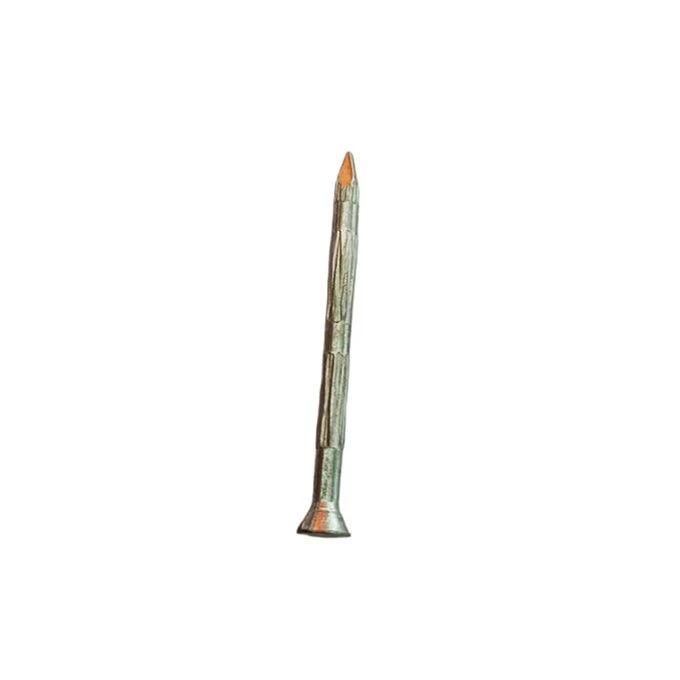
So what makes a furniture nail different, and why does it work for leather? Let’s break down the key features: First, the head. Furniture nails have a small, flat head (usually 6mm to 10mm in diameter) that sits flush against the leather. A big head will press too hard on a small area, causing indentations or even tearing, while a head that’s too small won’t cover the fastener hole, leaving a rough edge on the leather. Second, the shank. Unlike wood nails, furniture nails have a ringed or barbed shank. The barbs bite into the leather’s collagen fibers as you drive the nail, creating a secure grip that resists pull-out. That’s critical for leather, because without that grip, the trim (like nailhead trim on sofa arms) will loosen with regular use. Third, the length. For leather, we recommend nails that are 12mm to 16mm long— long enough to go through the leather, the upholstery padding, and the frame (usually a hardwood frame for furniture), but not so long that they poke through the other side of the leather or split the frame.
We’ve done a test here at our warehouse to prove this. We took three pieces of 2mm top-grain leather (standard for sofa trim) and applied three different fasteners: our furniture nail, a wood nail, and a galvanized iron nail. We attached each to a plywood frame, then hung 5kg weights on each (simulating the pull of a leaning body). The wood nail pulled out in 12 seconds, the galvanized iron nail (16mm) pulled out in 28 seconds, and our furniture nail with barbs held for over 10 minutes— and when we checked the leather, it only had a tiny, intact hole around the nail. That test is why we’re confident furniture nails work, but only when chosen correctly.
But there are rules to follow, even with the right nails. First, test a small, hidden area of the leather first. Before you start nailing the trim on your sofa’s arms, drive one nail into the bottom of the back panel (a spot no one will see) to check if it tears. Some leathers are treated with oils or waxes that make them slippery, so even a furniture nail might slide out. If that happens, you can lightly sand the nail’s shank with fine-grit sandpaper to add a little texture, or use a tiny drop of leather adhesive on the shank before driving it in— just don’t use too much adhesive, or it will seep out and stain the leather.
Second, adjust your hammer. If you hit the nail too hard, the head will sink too far into the leather, creating an unsightly dent. If you hit it too soft, the nail won’t grip the leather fully. We recommend using a small upholstery hammer (10oz or less) with a soft rubber head for leather— it gives you enough force to drive the nail in to the head, but not so much that it damages the leather. Another trick: place a small piece of scrap leather over the nail head when you hammer, which distributes the force and prevents the leather from stretching or tearing.
Third, choose the right nail size for your project. For thin split leather (1mm to 2mm), use a 12mm furniture nail with a 6mm head. For thick full-grain leather (3mm to 4mm), use a 16mm nail with a 8mm head. If you’re attaching leather to a curved surface (like a sofa arm), use a slightly shorter nail to avoid splitting the frame as you nail around the curve. And never use a nail longer than 16mm for leather— longer nails are more likely to poke through the other side or split the frame, which will tear the leather on the back.
We also get asked a lot about decorative furniture nails (the ones with ornate heads, like brass or antique bronze). Those work for leather too, as long as the head size matches the nail shank. A decorative nail with a small head will still grip the leather, but make sure the shank is barbed— avoid smooth decorative nails, which will pull loose over time. We’ve seen customers use decorative furniture nails on leather headboards and accent chairs, and as long as they follow the testing rule, the results are professional-looking and durable.
Now, what about when furniture nails are NOT the right choice for leather? If you’re re-upholstering a piece where the leather is loose, stretched, or has a lot of wrinkles, furniture nails won’t hold it in place. You’ll need to use a staple gun with heavy-duty 1/2-inch staples first to pull the leather tight over the frame, then use furniture nails for the trim. The trim is the decorative part, and nails are perfect for that, but staples are better for securing the main leather panel. We’ve also found that if you’re working with very thin, delicate leather (like the kind used for small leather goods or thin back panels), a furniture nail might create a hole that’s too big. In that case, use a smaller, 10mm nail with a rounded tip to minimize the size of the hole.
Another common mistake: using furniture nails for outdoor furniture. Most furniture nails we sell are galvanized or brass-plated, but if they’re not marine-grade, they’ll rust when exposed to moisture, which will stain the leather. If you’re working on outdoor leather furniture, make sure to use galvanized iron nails (like the ones linked here: Galvanized Iron Nail) that are rust-resistant, or look for our marine-grade furniture nails specifically made for outdoor use.
Let’s talk about common issues people run into when using furniture nails on leather. The first is leather tearing. This almost always happens when you use a nail that’s too long, or you hit it too hard. If the nail tears the leather, don’t panic— you can use a small dot of leather glue to patch the back of the hole, or cover it with a decorative nail head that’s a little bigger (but make sure it’s still the right size for the shank). The second issue is nails pulling loose. This is usually from using a smooth shank nail (like a wood nail) or not testing the leather first. If a nail pulls loose, you can remove it, sand the hole lightly, and drive a new furniture nail in right next to it— just don’t reuse the old hole, because it’s already stretched. The third issue is indented leather. This happens when the nail head is too big, or you hit it too hard. To fix this, you can use a leather filler to smooth the indent, or if it’s on a small piece, cover it with a decorative nail head that’s placed nearby to hide the imperfection.
From our experience as a furniture nail supplier, the biggest mistake people make is not differentiating between a standard nail and a furniture nail. A wood nail is designed for hard wood, not flexible leather, and a sod staple is designed for soil, not upholstery. When you match the fastener to the material, leather furniture can be as durable (or even more so) than fabric upholstery. We’ve had customers tell us that their mid-century sofa, which they re-upholstered with our furniture nails 5 years ago, still looks like new— no loose trim, no torn leather. That’s the power of using the right nail.
If you’re working on a leather furniture project and you’re not sure which nail to use, don’t hesitate to reach out. Our team has helped hundreds of upholsters and DIY enthusiasts choose the right furniture nail for their specific leather type, thickness, and project. We don’t just sell nails— we offer advice, because we know that the right fastener makes all the difference in a good upholstery job.
To learn more about our furniture nails, or to discuss your leather furniture project, get in touch with our team today. We’re here to answer your questions, share test results, and help you choose the perfect nails for your needs.

References:
- Upholstery Magazine, “Fastener Selection for Leather Furniture”, 2021
- Leather Industry Association, “Collagen Fiber Strength and Fastener Performance”, 2019
- Furniture Design Journal, “Trim Fasteners and Long-Term Furniture Durability”, 2020
- Test Report on Upholstery Fasteners, Industrial Materials Testing Lab, 2022